
笑傲江湖
顶尖球星梅西计划通过一家新硅谷控股公司进入科技投资领域_我的网站

一 | 总部设在旧金山的梅西集团表示,Play Time将是一家控股公司,另外还将作为梅西在全球范围内投资体育、媒体和技术的主要载体。
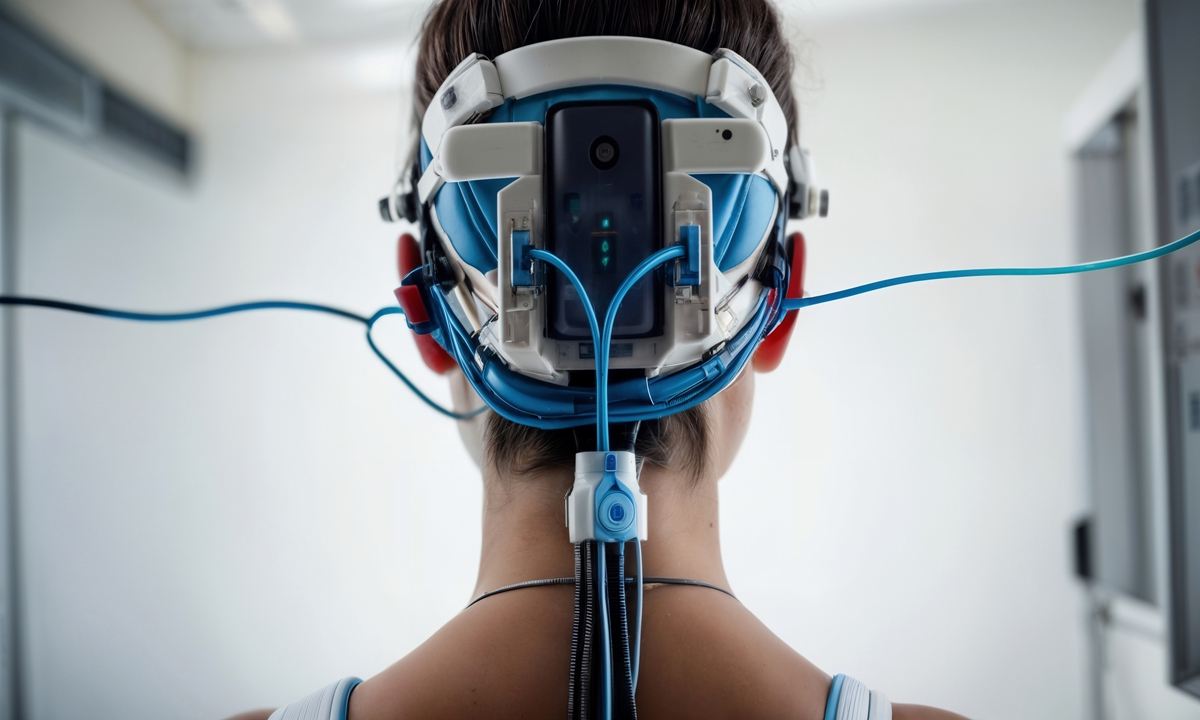
Chinese researchers have developed a multifunctional electrode coating that addresses key challenges in long-term brain-computer interface (BCI) implantation, including signal loss and tissue adhesion, bringing BCI one step closer to clinical application, the Global Times learned from the research team behind the findings on Sunday.
As an emerging field combining neuroscience and artificial intelligence (AI), BCI faces a major challenge of ensuring long-term compatibility between electrodes and brain tissue. Previous clinical trials showed that immune responses could cause implanted electrodes to retract after just three months, severely reducing signal quality and the number of available channels.
This problem stems from chronic inflammation triggered by implants, which creates insulating scar tissue around electrodes and separates them from neurons. Irreversible adhesion between electrodes and brain tissue after long-term implantation also makes device removal risky, potentially causing brain injury during follow-up surgeries.
Experiments showed that flexible neural electrodes coated with this material could operate stably in the brain for more than 300 days and could be safely removed without causing damage. This means the universal coating technology can make electrodes not only operate stably over the long term but can also be safely removed and replaced after aging, paving the way for long-term BCI applications.
Developed by the research team led by Zhang Wei at the Technical Institute of Physics and Chemistry, Chinese Academy of Sciences, associated with Beijing Tiantan Hospital, Shanghai Institute of Microsystem and Information Technology and NeuroXess, a high-tech life science company specializing in BCI technologies, the cationic alternating peptide electrode coating preserves electrode flexibility and conductivity, while offering antibacterial, anti-protein adsorption and immune-rejection-inhibiting functions.
A 300-day animal study showed the coating's effectiveness. Bare electrodes experienced a sharp loss of recording capability after 90 days of implantation and could barely detect neuronal signals after 300 days. In contrast, coated electrodes maintained stable recording channels and consistently captured neural signals above 155 microvolts.
In terms of neural modulation, after 300 days of implantation, conventional electrodes required a current of 100 microamps to induce weak limb responses, while coated electrodes triggered clear movements with only 2 microamps, improving modulation efficiency by 50 times.
Notably, the removal tests highlighted a key advantage of the coating that electrodes no longer form irreversible bonds with brain tissue. In the experiments, the coated electrodes were removed intact, with minimal damage to the surrounding brain tissue, Zhang told the Global Times on Sunday.
。与此同时,该公司在一份声明中表示,Play Time还将考虑入股运动队并投资于足球技术。Play Time还透露,它已经孵化了一家名为Matchday.com的初创公司,这是一家仍处于隐身状态的足球迷游戏工作室,计划在11月的国际足联世界杯前推出。此外,它还对AC Momento进行了首次种子期投资,该公司拍卖从俱乐部和球员那里获得的比赛用球衣。

二 | 梅西在一份声明中说道:“我很高兴能将我们的根延伸到硅谷,我很高兴Play Time将与来自世界各地的大胆的企业家合作。我希望通过它的成功,Play Time将帮助许多人并对世界产生积极影响。我相信团队和我们的合作伙伴能够实现我们的目标。”Play Time的联合创始人和CEO将是Razmig Hovaghimian(图左)。Hovaghimian曾经领导过Hoodline(Pixel Labs),这是一个将机器学习跟实地报道相结合的本地新闻平台。另外,他还共同创立了娱乐创业公司Viki,该公司在2013年以2亿多美元的价格退出了乐天。因此,他作为董事会观察员加入了乐天的企业董事会并在2016年被任命为该公司的首位驻场企业家。Hovaghimian表示:“我们全身心投入,并首先在足球的50亿球迷和技术之间建立起一座强有力的桥梁。”据悉,他将跟商业银行Code Advisors的Michael Marquez和专注于早期投资的种子阶段基金Morado共同领导Play Time。
Current article:http://94ea.linlangdouwaqiexusan.bond/mlt1/1es.html
Published on:03:51:07
[责任编辑: 开顺]